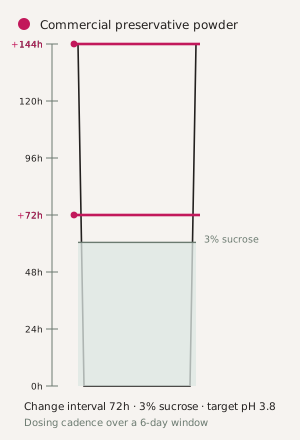
Commercial preservative powder: follow the sachet, 72-hour changes
· Published 2026-09-13 · Vase solutions
The sachet that comes taped to a bunch of flowers is not a marketing extra — it is the most effective single thing you can put in the vase, and it is formulated at a sugar concentration you cannot easily reproduce at home.
Sucrose 3 % Target pH 3.8 ±0.2 Change interval 72 h Available chlorine None mg/L Make at home No
| Component | Per litre | Role |
|---|---|---|
| Commercial floral preservative powder (sachet) | 1 sachet per 500 mL, per label | complete formulation: sugar + acid + biocide + wetting agent |
| Sucrose | 3 % | Target pH 3.8 (±0.2) |
| Change interval | 72 h | Available chlorine: None |
| Make at home | No | hydroxyquinoline citrate (HQC) or a quaternary ammonium salt, pre-formulated |
Why the sachet beats a kitchen recipe
A commercial powder contains four things at once: sucrose (usually 3%, higher than the 2% that is safe without a biocide), an acidifier, a biocide such as HQC, and a surfactant that lowers surface tension so the solution wets the stem end faster. Getting those four in balance by hand is possible but the sachet is consistent batch to batch.
The practical effect on alstroemeria: 7 days in plain water, 12–14 days with the sachet. That is close to double.
- Use the whole sachet in the stated volume — a half dose gives half the biocide and none of the benefit.
- Mix with room-temperature water, not cold; the powder dissolves slowly below 15 °C.
- Never mix two brands in one vase.
The 72-hour interval and its limits
With a real biocide the solution stays effective far longer than a home recipe. Three days is the standard interval, but it is temperature-dependent: above 24 °C the biocide is consumed faster and the interval should come back to 48 hours.
| Room temperature | Change interval | Typical gain over plain water |
|---|---|---|
| 16–20 °C | 72 h | +5 to +7 days (rose) |
| 20–24 °C | 72 h | +4 to +6 days |
| above 24 °C | 48 h | +3 to +4 days |
| above 28 °C | 24 h | +1 to +2 days |
What to do when you have no sachet
If a bunch arrives without its sachet, do not substitute a home sugar recipe on a high-ethylene stem. Use plain water with a 24-hour change instead — it is less effective than the sachet but strictly better than a sugar solution that has gone cloudy and is now feeding the bacteria that will block the stem.
One sachet can be split across two small vases if both are changed on the same day; the biocide concentration is what matters, so keep the water volume at or below the label's stated total.
- No sachet: plain water, 24-hour changes, and recut on day three.
- Never top up a preservative solution with plain water — you dilute the biocide.
- Discard the solution at the first sign of cloudiness, regardless of the clock.
Follow the sachet: typically 5 g per 500 mL (10 g/L) or 10 g per 1 L