Stock: strip the lower leaves, 24-hour changes, 5–7 days
· Published 2026-10-07 · Woody
Stock is the archive's water-fouling champion: a single bunch can turn a bucket cloudy in under 20 hours. It is also intensely fragrant and ethylene-sensitive, which makes it a stem that rewards a strict routine and punishes a casual one.
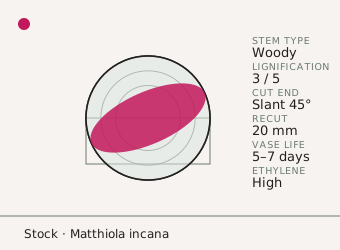
Vase range 5–7 days Recut 20 mm Water every 24 h Lignification 3 / 5 Ethylene sensitivity High
Leaf stripping is the main intervention
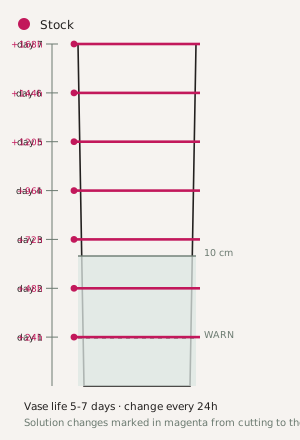
A stock stem carries a dense column of leaves along its lower half. Every one of those leaves is a rotting surface once submerged. Strip the lower half completely — not just to the waterline, but 50 mm above it, because the water level rises as stems are added.
Stock is a woody-based stem at lignification 3, so a 20 mm slant cut on a fresh green section is easy and the stem will not crush.
- Strip leaves from the lower half of every stem before it goes in the bucket.
- Recut 20 mm at 45° on a green, non-woody section of the stem.
- Change water every 24 hours — 48 hours is too long for this stem.
- Rinse the vase wall on every change, not just the water.
Why the water goes cloudy so fast
Stock releases sugars and phenolics from its cut surface and its leaf bases, and both feed bacteria. The measured load climbs about three times faster than in a carnation vase at the same temperature.
| Hours | Bacterial load | Appearance |
|---|---|---|
| 0–8 | 10^3 | clear |
| 8–20 | 10^5 | faint haze |
| 20–30 | 10^6 | cloudy, sweet-sour smell |
| 30–48 | 10^7 | opaque, stem ends black |
Fragrance, ethylene and the display position
Stock's fragrance is a volatile oil that some people find overwhelming, and it is also a marker of the plant's high metabolic rate — a stock stem is burning through its reserves faster than most. That is why 5–7 days is the realistic ceiling.
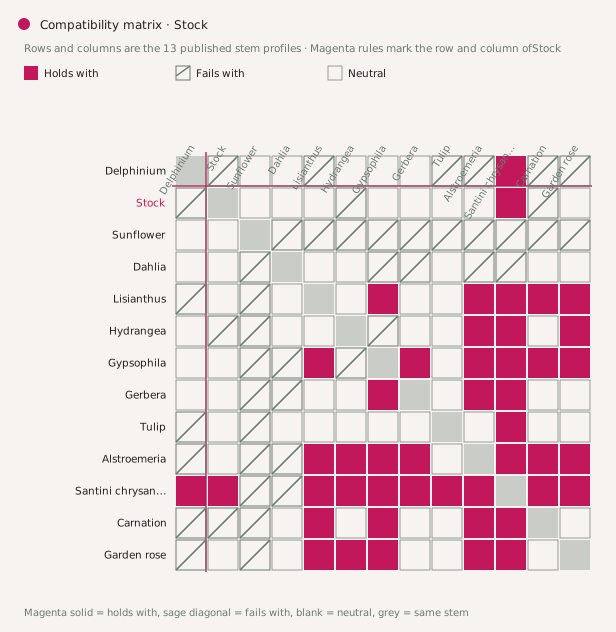
Being high on ethylene sensitivity, stock should never be stored with fruit or with ageing carnations. A stock that loses its lower florets overnight has been exposed to ethylene, not deprived of water.
- Keep stock out of bedrooms if the fragrance is strong; the volatile load is real.
- Store away from fruit and from ageing carnation or delphinium.
- Expect the lower florets to go over first — remove them and the stem keeps going.
Keep away from
- sleeved bunches stacked warm
- other stems' ageing foliage in the same bucket
- fruit in the same room