Gypsophila: no end treatment, 48-hour changes, 7–10 days
· Published 2026-09-23 · Herbaceous
Gypsophila is filed under the 'no treatment' cut class for a specific reason: its stems are wiry and brittle, and every common end treatment — crushing, splitting, searing — destroys more vessels than it opens. A plain sharp cut is the correct method.
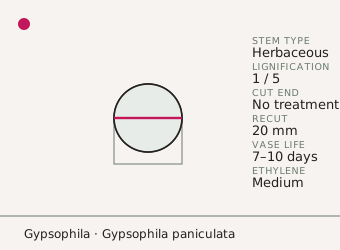
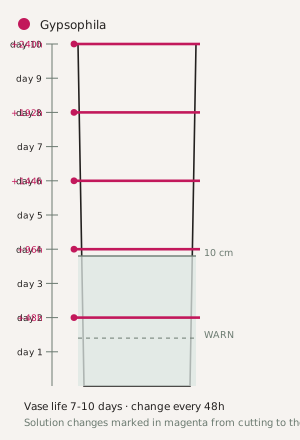
Vase range 7–10 days Recut 20 mm Water every 48 h Lignification 1 / 5 Ethylene sensitivity Medium
Why no end treatment at all
A gypsophila stem is roughly 1.5 mm across with a thin, continuous ring of vessels and very little secondary thickening. Crushing the end to increase surface area — the standard trick for woody stems — collapses that ring and blocks it. Searing does the same by cooking the tissue.
The right method is a single clean cut with sharp snips, 20 mm up from the base, and then no further handling of the cut end.
- Cut 20 mm with sharp snips; do not use scissors that crush between blades.
- Never hammer, split or scrape the base of gypsophila.
- Do not sear or boil the ends, even if the water looks cloudy.
- Recut once more only if the stem has been out of water for more than 20 minutes.
Hydration is the limiting factor, not bacteria
Gypsophila's problem is rarely infection and almost always air. The stems hold so little water that a 30-second exposure is enough to dry the top 50 mm of the vascular column. Handle it wet, always.
| Time out of water before arranging | Vase life | Symptom |
|---|---|---|
| under 1 minute | 9–10 days | none |
| 5 minutes | 8 days | slight tip drying |
| 20 minutes | 6 days | panicle tips crisp |
| 1 hour | 3–4 days | stems cannot rehydrate at all |
Support and the drying option
Because gypsophila has almost no stem strength, it needs a grid or a companion stem to hold the panicles upright. In a hand-tied bunch place it between two stronger stems rather than on the outside.
Gypsophila is also one of the few stems here that dries well: hung upside down in a dark, dry room at 20 °C it holds its shape and colour for months. If the vase life drops below five days, dry the remainder rather than fighting it.
- Bundle loosely with twine and hang heads-down in the dark for 10–14 days.
- Do not dry in sunlight — the white panicles yellow within a week.
- Dried gypsophila stays out of water permanently; putting it back in the vase restarts rot.
Keep away from
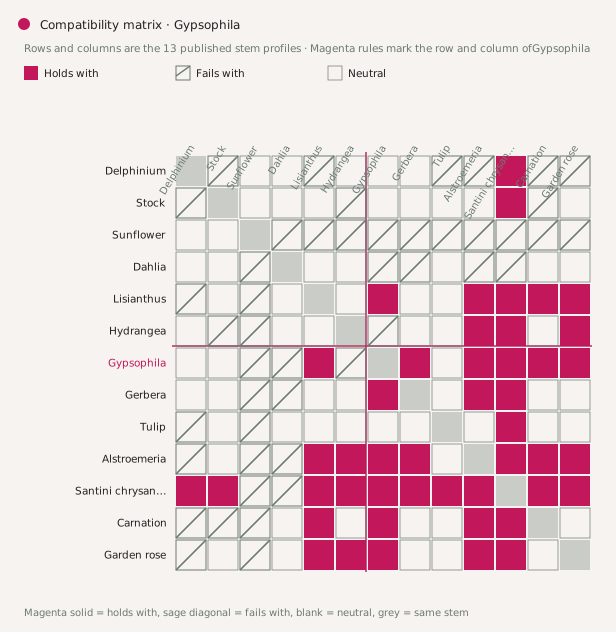
- shared storage with carnation or delphinium
- compression under other bunches in a van