Delphinium: cut under water, wire the hollow stem, 5–7 days
· Published 2026-10-09 · Herbaceous
Delphinium is the archive's most ethylene-fragile stem and one of its two hollow-stemmed entries. It is also the tallest common cut flower, which means the air embolus has further to travel and the stem has further to bend.
Vase range 5–7 days Recut 20 mm Water every 24 h Lignification 1 / 5 Ethylene sensitivity Extreme
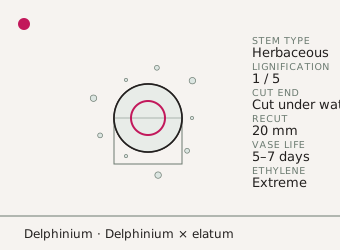
Cut under water and keep the column full
A delphinium stem is hollow from the cut to about 40 mm below the lowest floret. Air entering that tube is not stopped by any tissue and will travel the whole way, which is why a dry cut produces a stem that goes limp above the cut within hours.
Cut 20 mm at 45° with the stem end fully submerged in a bowl of clean room-temperature water.
- Use a deep narrow jug so the whole cut stays below the surface.
- Never lay a cut delphinium flat — the hollow tube drains and the air lock reforms.
- Do not blow into or rinse the hollow centre; both introduce air or bacteria.
- If the stem goes limp, recut 20 mm under water and it will usually recover within an hour.
Sugar and cooling both extend the run
Delphinium florets open from the bottom upward over five to seven days, and each floret demands sugar. In plain water the top third of the spike fails to open; in a 2% sucrose solution with a biocide, most of the spike opens.
| Solution | Florets opened on a 9-floret spike | Vase life |
|---|---|---|
| 2% sucrose + biocide | 8 of 9 | 7 days |
| Commercial preservative | 7 of 9 | 6–7 days |
| Plain water | 5 of 9 | 5 days |
| Plain water, no change | 4 of 9 | 3 days |
Wire it, and keep ethylene away
The hollow stem has almost no bending strength; a 900 mm delphinium spike in a vase needs a 1.6 mm wire inserted from the base to just under the lowest open floret. Without it, the spike bends 30–40° within a day.
Ethylene is the other half of the problem. Delphinium is rated extreme: the visible symptom is floret drop, and it starts from the oldest florets at the base. Once a floret drops, the spike is on a countdown, so buy or cut with the lower third still in tight bud.
- Insert a 1.6 mm wire from the base before arranging.
- Never store with carnation, lisianthus or fruit.
- Remove dropped florets immediately — they are the ethylene source.
- Buy with the lower third in tight bud to maximise the display window.
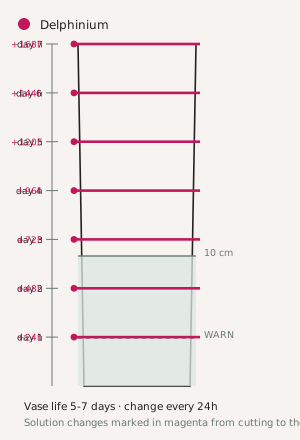
Keep away from
- any other ageing flower in the same bucket
- fruit
- exhaled air in a closed vehicle
- warm sleeves