Alstroemeria: pull the stems, keep the leaves, 7–14 days
· Published 2026-09-09 · Semi-woody
Alstroemeria is the archive's high-sugar stem. Its 7–14 day range is only achieved when the leaves stay on and the solution carries sugar — strip the foliage or use plain water and the same stem finishes in five days.
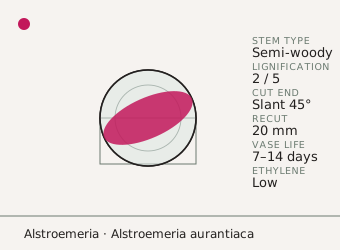
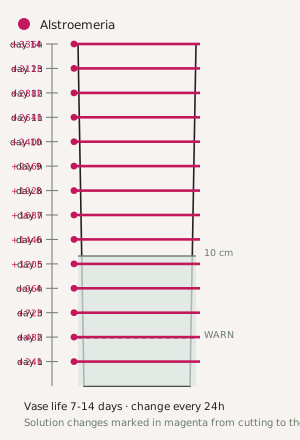
Vase range 7–14 days Recut 20 mm Water every 24 h Lignification 2 / 5 Ethylene sensitivity Low
Pull, do not cut, at harvest
Alstroemeria is one of very few cut flowers harvested by pulling the stem away from the rhizome rather than cutting it. The pulled stem carries a clean basal meristem that closes over, while a cut stem leaves an open wound that leaks and seals badly.
That matters to you because stems that were cut rather than pulled at harvest will have a soft, leaking base on arrival. Recut 20 mm above the soft section.
- Look for a firm, dry base — that means the stem was pulled.
- If the base is soft or weeping, recut 20 mm higher, above the damaged section.
- Strip only the leaves that would be submerged; the rest carry the flower.
- Do not strip foliage more than a day before arranging — the leaves are the sugar factory.
Sugar is the whole story for this stem
Alstroemeria leaves are exceptionally active and continue photosynthesising in the vase, feeding the flower for days after cutting. In plain water that reserve runs out at roughly day four; in a sugar solution the same stem goes to 12–14 days.
| Vase solution | Vase life | Leaf condition at day 7 |
|---|---|---|
| Commercial preservative, 24 h changes | 12–14 days | green, turgid |
| 2% sucrose + biocide, 24 h changes | 11–13 days | green |
| Plain water, 24 h changes | 7 days | yellowing from the base |
| Plain water, no changes | 5 days | leaves limp and yellow |
The leaf-yellowing symptom, read correctly
Yellowing alstroemeria leaves are almost never a disease symptom. They are either sugar starvation or ethylene exposure from a neighbour. Rule out sugar first because it is the more common cause and the cheaper fix.
Alstroemeria also has a quirk useful to know: its leaves twist and turn over if the stem is laid flat for long. Handle it upright after the initial conditioning.
- Yellow from the base upward means sugar; yellow from the tip means ethylene.
- Twisted leaves mean the stem was laid flat — cosmetic only, not a sign of poor vase life.
- Remove individual yellowed leaves rather than the whole stem; the flower itself is still sound.
Keep away from
- long storage in the dark
- leaves stripped more than 24 hours before use