Santini chrysanthemum: 25 mm recut, 48-hour changes, 10–14 days
· Published 2026-09-01 · Semi-woody
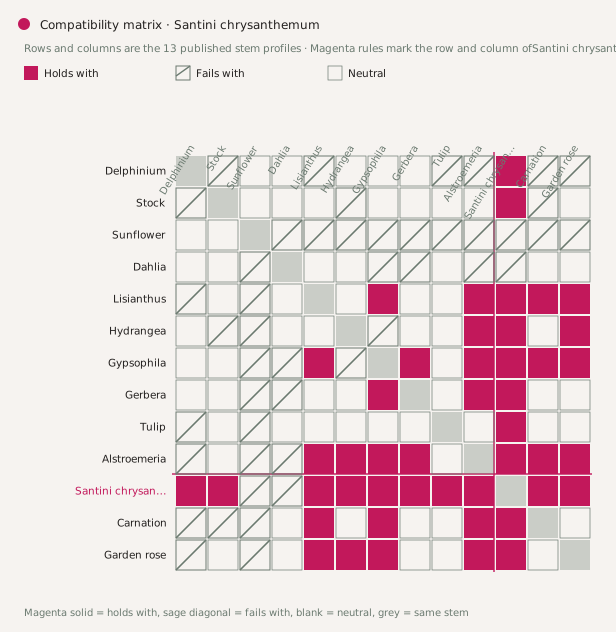
Santini chrysanthemum is the archive's low-maintenance benchmark. At ethylene sensitivity 1 of 4 and 10–14 days of vase life, it is the stem you use to prove a vase position is bad — if a Santini fails, nothing else will survive there.
Vase range 10–14 days Recut 25 mm Water every 48 h Lignification 3 / 5 Ethylene sensitivity Low
The 25 mm recut is longer than it looks
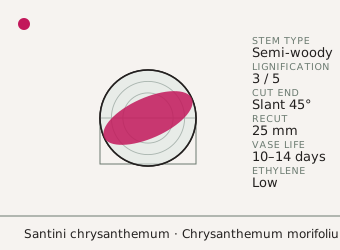
Santini stems arrive with a hardened, air-dried callus at the base — the residue of the grower's own cut. That callus does not rehydrate. The 25 mm recut removes it entirely; a 10 mm trim leaves part of it in place and the stem never takes up water properly.
Because the stem is semi-woody at lignification 3, a clean bypass cut is easy and the stem will not crush in a crowded bucket.
- Recut 25 mm, 45°, and check the cut face for a pale, dry core — if you see one you did not cut far enough.
- Strip leaves from the lower third; Santini foliage left submerged is the most common cause of a cloudy vase.
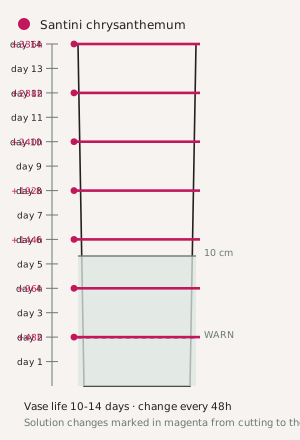
- Stand in 10 cm of water, not 5 and not 20.
Why it tolerates a 48-hour change
The low ethylene sensitivity and slow transpiration mean a Santini vase stays below the plugging threshold for two full days. That is what makes this stem the workhorse of mixed arrangements that are not reworked daily.
| Condition | Vase life | Note |
|---|---|---|
| Changed every 48 h, 18–20 °C | 13–14 days | best case |
| Changed every 48 h, 24 °C | 10–11 days | petal colour fades first |
| Changed every 96 h | 7 days | stem end blackens |
| Not changed at all | 5 days | water opaque by day 3 |
Using it as a diagnostic stem
Keep two Santini stems in any new display position for a week before committing a rose or a lisianthus to it. If the Santini shows leaf scorch, the position has an airflow or ethylene problem you have not found yet.
Unlike carnation, a Santini that closes its petals has usually just run out of water — check the water level before assuming ethylene.
Keep away from
- prolonged storage above 25 °C
- wilted foliage from other stems left in the same sleeve