Sunflower: sear the milky stem, change water daily, 5–7 days
· Published 2026-10-04 · Herbaceous
A sunflower drinks more water per day than any other stem in this archive — up to 150 mL for a single large head — and its milky sap feeds bacteria better than sugar water does. Both problems are addressed at the cut end.
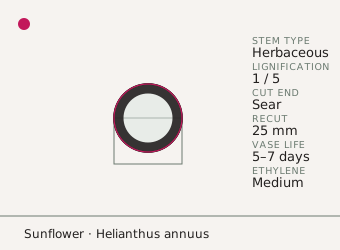
Vase range 5–7 days Recut 25 mm Water every 24 h Lignification 1 / 5 Ethylene sensitivity Medium
Sear the cut end, then give it a tall vase
Sunflower sap is thick and milky; left alone it seals the stem badly and leaks into the vase, where it becomes a bacterial substrate. Dipping the freshly cut end in boiling water for 20 seconds, or passing it through a flame for 10, sets the sap and keeps the water clear for an extra day.
The sear also closes the hollow pith, which on a sunflower can be 8 mm across.
- Recut 25 mm at 45° with a sharp blade — never crush a sunflower stem.
- Sear the end for 10 seconds over a flame or dip 20 seconds in boiling water.
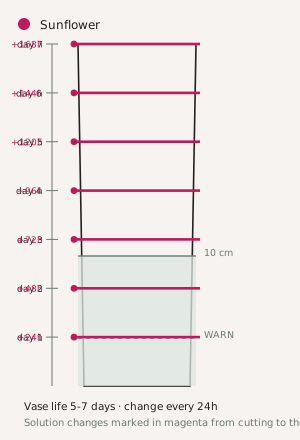
- Stand in at least 15 cm of water; a sunflower's daily draw is large and a shallow vase runs dry overnight.
- Top the water up between changes; a wilting sunflower head rarely recovers.
Daily water is not optional for this stem
At 22 °C a sunflower vase reaches a bacterial load that visibly clouds the water in under 24 hours. Change it every day, and rinse the vase wall each time — the biofilm on the glass is where the next day's bacteria come from.
| Change interval | Vase life | Water at day 3 |
|---|---|---|
| 24 h | 6–7 days | clear |
| 48 h | 4–5 days | cloudy, faint smell |
| no change | 2–3 days | opaque, stem end black |
Support the head, and cut it young
A sunflower head is heavy and the stem has almost no lignin, so a head that is fully open on arrival will drop within days no matter what you do. Buy or cut at the stage where the outer ring of petals has just lifted and the centre is still tight.
For a single stem in a tall vase, a 1.6 mm wire inserted from the base up to just below the head prevents the classic 90-degree bend.
- Cut when the outer petals have just lifted, not in full open.
- Wire the stem for anything over 600 mm.
- Remove all leaves below the waterline and most of those above it — a sunflower does not need them.
- Keep away from draughts; a heavy head in moving air twists the stem.
Keep away from
- closed vehicles
- ethylene from its own ageing lower leaves
- shared buckets with soft-stemmed flowers