Carnation: cut above a node, 48-hour changes, 7–14 days
· Published 2026-08-25 · Semi-woody
Carnation is the archive's marathon stem — 7 to 14 days is normal, not exceptional — and also its most ethylene-fragile. A carnation that collapses overnight has almost always been exposed to ethylene, not to bad water.
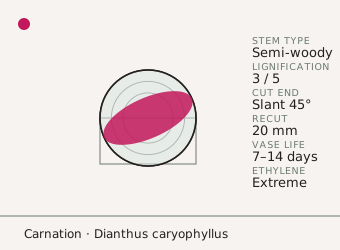
Vase range 7–14 days Recut 20 mm Water every 48 h Lignification 3 / 5 Ethylene sensitivity Extreme
The node is the whole technique
Carnation stems are hollow between nodes and solid at them. Cutting through a node crushes the septum and blocks the vessel outright; cutting 10–15 mm above a node leaves a clean, self-supporting opening that resists collapse for days.
Feel along the stem with a thumbnail to find a swelling, then cut above it. If you cannot find a node in the last 40 mm, cut at 45° and accept a shorter vase life.
- Recut 20 mm, always above a node, with sharp bypass pruners.
- Do not crush, strip or scrape the cut end — carnation responds to wounding by sealing the vessels with callose.
- Remove the bottom two leaf pairs entirely; carnation leaves rot against the vase wall.
Why 48 hours rather than 24
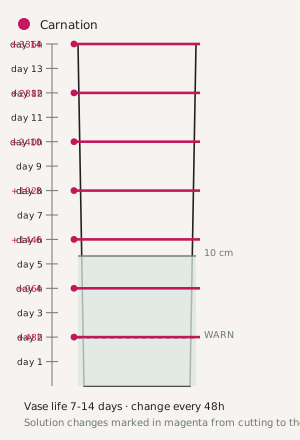
Carnation sap is comparatively low in sugars and its vessels are narrow, so bacterial growth in the solution runs slower than in a rose or sunflower vase. A 48-hour interval keeps the count below the plugging threshold.
The exception is a warm room above 24 °C: at that temperature shorten the interval to 24 hours, because bacterial generation time roughly halves.
| Room temperature | Change interval | Expected vase life |
|---|---|---|
| 16–20 °C | 48 h | 12–14 days |
| 20–24 °C | 48 h | 9–11 days |
| above 24 °C | 24 h | 7–8 days |
Sleepiness: the ethylene symptom to recognise
Ethylene damage in carnation is not petal drop, it is 'sleepiness': the petals close inward and the flower looks unopened even though it is mature. Sleepy carnations will often recover if moved to clean, ethylene-free air within a few hours.
Prevention is cheaper than recovery. Never store carnations with fruit, never sleeve them wet, and keep the delivery van ventilated.
- Treat with 1-MCP or a silver pulse before transport if the bunch is travelling more than two hours.
- Recognise sleepiness early — closed petals on a mature flower, no browning.
- Recover in ethylene-free air at 15 °C, not in the fridge next to produce.
Keep away from
- any fruit in the same room
- exhaled air in a closed vehicle
- sleeved bunches stacked in a warm van
- smoke of any kind