Dahlia: sear the cut end for 10 seconds, 4–7 days
· Published 2026-10-01 · Herbaceous
Dahlia is the archive's shortest-lived garden stem and the one where the cut treatment matters most. Its stem is hollow and milky; a plain cut will have the flower nodding within 24 hours, while a seared cut adds two to three days.
Vase range 4–7 days Recut 25 mm Water every 24 h Lignification 1 / 5 Ethylene sensitivity Low
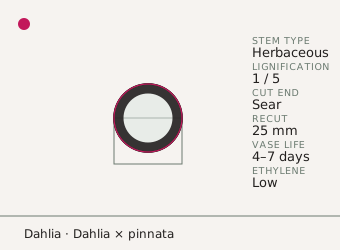
Searing: 10 seconds, flame, fresh cut only
The milky sap in a dahlia stem coagulates on contact with air, but slowly — slow enough that air reaches the hollow centre and the stem bleeds into the vase. Applying a flame to the cut end for about 10 seconds coagulates the sap instantly and seals the hollow pith.
Hold the stem at 30° with the cut end in the flame until the end blackens and stops bubbling, then put it straight into cool water. Do not char more than 5 mm.
- Recut 25 mm at 45° first — searing a dried cut does nothing.
- Sear for about 10 seconds until bubbling stops and the end is black.
- Plunge into cool water immediately; the temperature shock is part of the method.
- An alternative is a 20-second dip in boiling water, which is slower but produces the same plug.
Why dahlias still finish in under a week
Even with a perfect sear, a dahlia is a low-lignin, high-transpiration stem in a warm room. The ceiling is around seven days and no treatment moves it much beyond that. Plan arrangements accordingly rather than trying to extend it.
| Treatment | Vase life at 20 °C | Note |
|---|---|---|
| Sear + daily water change | 6–7 days | best achievable |
| Sear + 48 h changes | 5 days | water clouds on day 3 |
| Plain cut, daily change | 3–4 days | nodding by day 2 |
| Plain cut, no change | 2 days | stem end rots |
Cold water, cool room, and cutting late
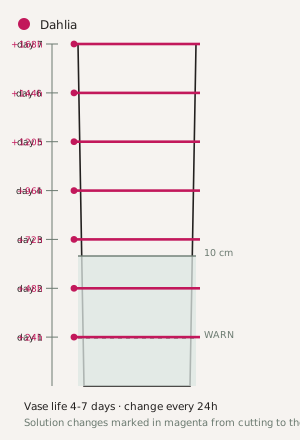
Dahlias respond to cold water far better than warm. Use water at 10–15 °C, change it every 24 hours, and keep the arrangement below 20 °C if possible.
If you are cutting from a garden, cut in the early morning when the stem is fully turgid, and take the stem into water within 60 seconds. Dahlias cut at midday in August will not last regardless of treatment.
- Cut early morning, never in the afternoon heat.
- Take a bucket of cool water into the garden with you.
- Remove all lower leaves — a dahlia leaf under water rots within 12 hours.
Keep away from
- warm rooms above 24 °C
- dry air from heaters