Tulip: shallow water, no re-cutting after day one, 3–7 days
· Published 2026-09-17 · Herbaceous
The tulip is the archive's shortest-lived stem by design. Its 3–7 day window is not a failure of care — it is the plant finishing a programme it started in the bulb. Everything useful you can do happens in the first hour.
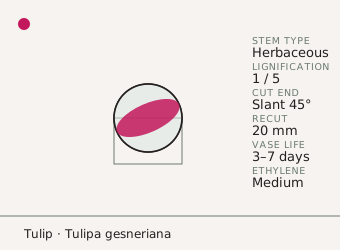
Vase range 3–7 days Recut 20 mm Water every 24 h Lignification 1 / 5 Ethylene sensitivity Medium
Cut once, then leave it alone
A tulip stem continues to elongate in the vase, up to 25 mm over three days, and bends toward the nearest light. Both motions are driven by cell elongation in the stem below the flower, which is exactly the tissue a second cut would damage.
Recut on arrival at 20 mm, 45°, then do not recut again for the life of the vase. If the stem end goes soft, discard the stem rather than refreshing it.
- Recut 20 mm once, immediately on arrival, in cool room-temperature water.
- Strip only the leaves that would be submerged — tulip foliage left on the stem helps fill the flower.
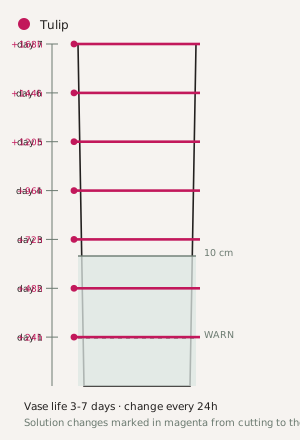
- Change water every 24 hours but never lift the stem out for more than a few seconds.
Shallow water is the single biggest variable
Tulips are unusually susceptible to stem-end rot in deep water. Fill the vase to 5–7 cm and no more; the deeper the water, the larger the wetted surface for soft-rot bacteria and the more the stem softens at the base.
| Water depth | Median vase life at 20 °C | Typical failure mode |
|---|---|---|
| 5 cm | 7 days | petal drop, clean stem |
| 10 cm | 5–6 days | slight stem-end softening |
| 15 cm | 3–4 days | stem-end rot, water cloudy by day 2 |
Cold, and the last 24 hours
Tulips are the one stem on this archive that genuinely prefers cool water over warm. Keep them at 15–18 °C if you can; above 20 °C the flower opens within 48 hours and the stem cannot supply it.
Tulips are geotropic: laid flat they curve, stood upright they straighten. If a stem arrives bent, wrap it loosely in newspaper and stand it in 5 cm of cool water for two hours before arranging.
Keep away from
- cut flowers sharing a cold box with apples or pears
- ethylene from damaged bulbs
- warm display above 20 °C