Hydrangea: 30 mm recut plus a 30-second boiling-water dip, 5–10 days
· Published 2026-09-25 · Woody
Hydrangea is the archive's counter-intuitive entry: it is low on ethylene sensitivity yet collapses faster than almost anything else, because most of its water loss happens through the petals. The fix is sealing the stem, not cooling the room.
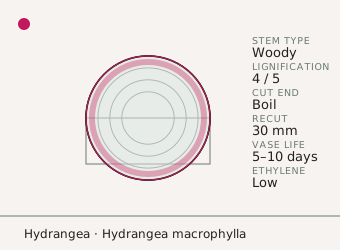
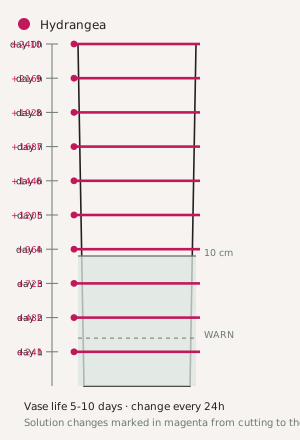
Vase range 5–10 days Recut 30 mm Water every 24 h Lignification 4 / 5 Ethylene sensitivity Low
The 30-second boiling-water dip
Hydrangea sap coagulates readily, which is exactly what you want at the cut end. Stand the bottom 30 mm of the freshly cut stem in boiling water for 30 seconds, then move it straight into cool clean water. The heat denatures the sap proteins and forms a plug that stops the stem from leaking and re-sealing badly.
Thirty seconds is the whole window. At 60 seconds the heat travels far enough up the stem to damage the vessels you need; at 10 seconds no plug forms.
- Recut 30 mm at 45° first — the dip must be done on a fresh cut, never on a dried one.
- Stand the stem in 25 mm of actively boiling water, timed, for exactly 30 seconds.
- Transfer immediately to room-temperature water; do not let the boiled end cool in air.
- If you do not want to boil, an alternative is dipping the cut end in powdered alum — less effective but safe.
Petals are the water loss, so treat the head
Unlike almost every other stem here, a hydrangea transpires mainly through the coloured sepals of the head rather than the leaves. That is why a hydrangea in dry air collapses even with a perfect stem.
| Condition | Vase life | What fails first |
|---|---|---|
| Boiled stem, 60% RH, 18 °C | 9–10 days | outer sepals |
| Boiled stem, 35% RH, 24 °C | 5 days | whole head wilts in 6 hours |
| Unboiled stem, 60% RH | 6 days | stem end re-seals badly |
| Boiled stem, no water change | 4 days | head droops, water clear |
Rescue: the full-immersion method
A wilted hydrangea head is recoverable far more often than people expect. Submerge the entire head in room-temperature water for 45 minutes — petals absorb water directly — then shake off the excess and stand the stem in fresh water.
Repeat at most twice. After the third collapse the sepal tissue has lost the ability to reabsorb and the head will not come back.
- Float the head face-down in a sink or bowl of room-temperature water for 45 minutes.
- Do not use cold water; it slows the uptake you are trying to achieve.
- Shake gently and stand upright without squeezing the stem end.
Keep away from
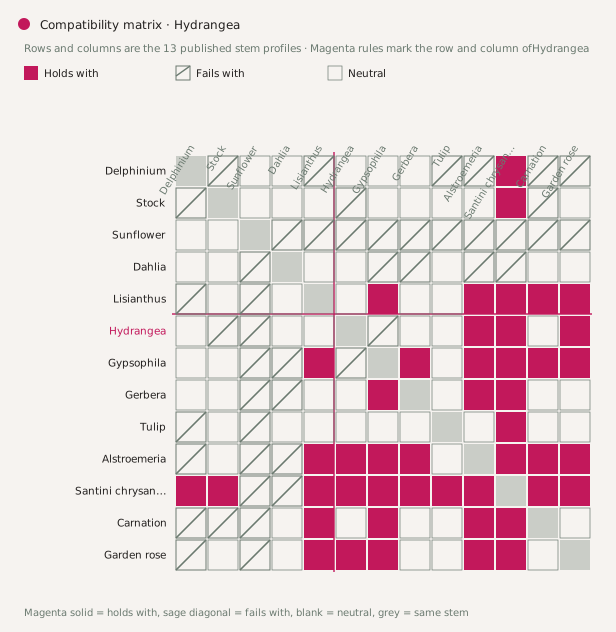
- dry air from air-conditioning vents
- direct afternoon sun on the head