Gerbera: cut 20 mm under water, 5–7 days, shallow vase
· Published 2026-09-20 · Herbaceous
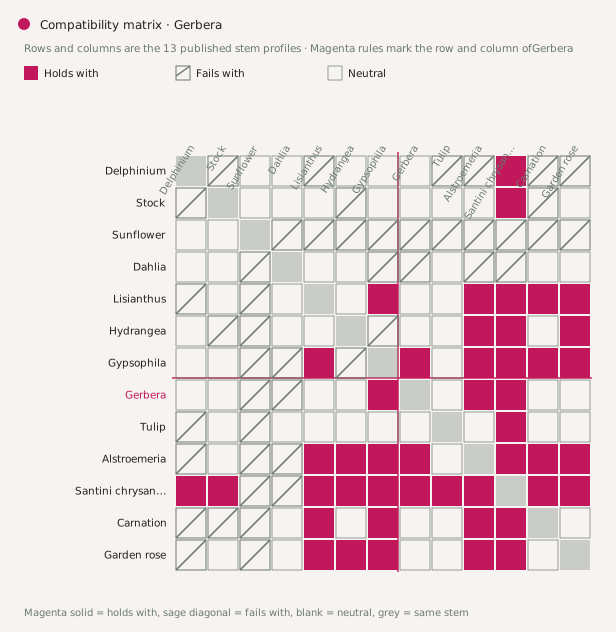
A gerbera stem is a hollow tube about 4 mm across with a single ring of vessels. Air enters it instantly and irreversibly if the cut is made in air — which is why this is the one stem in the archive where cutting under water is mandatory rather than optional.
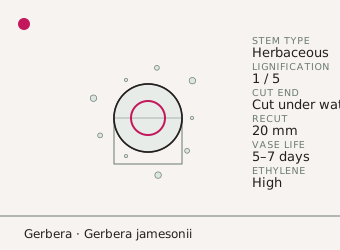
Vase range 5–7 days Recut 20 mm Water every 24 h Lignification 1 / 5 Ethylene sensitivity High
Cut under water, then keep it there
The air embolus in a gerbera travels the full length of the tube in under a second because there is nothing to stop it. Once it reaches the neck, no amount of clean water will move it and the flower will nod within four hours.
Hold the stem end below the surface of a bowl of clean room-temperature water and cut 20 mm at 45°. Keep the cut end submerged while you transfer the stem to the vase.
- Fill a wide bowl with 5 cm of clean water and cut the stem with the end fully submerged.
- Never lift the stem clear of the water between the bowl and the vase.
- If you must recut later, repeat the underwater cut — a dry recut does more harm than no recut.
- Do not scrape or split the stem to 'help uptake'; on a hollow stem this only creates a second air entrance.
Five centimetres of water, supported upright
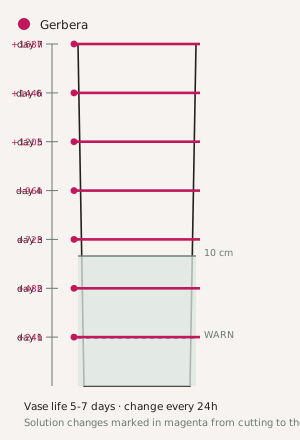
Gerbera takes up water across the whole wetted stem surface, so a deep vase is not just unnecessary, it invites rot. Five centimetres is the measured optimum; beyond ten, the tube softens within 48 hours.
| Water depth | Vase life at 20 °C | Failure mode |
|---|---|---|
| 5 cm | 6–7 days | petals fade first |
| 10 cm | 5 days | tube softens at the vase rim |
| 15 cm | 3 days | neck collapse |
Support the neck with wire
Even a perfect cut will not stop a gerbera nodding if the stem is more than about 350 mm long. Insert a 1.2 mm florist wire up through the hollow centre from the base, stopping 10 mm short of the flower head. This is a structural fix, not a water fix, and it works.
For heavy-headed cultivars use two wires crossed at the neck instead.
- Insert the wire from the base, never from the flower end.
- Stop 10 mm short of the head so the wire does not pierce the receptacle.
- Recheck the water level daily — a wired stem hides the fact that it has run dry.
Ethylene and the display position
Gerbera is high-sensitivity: a bowl of ripening fruit across the room can cost a full day of vase life. Keep the display below 22 °C and out of direct sun, and remove any gerbera that has lost its outer ring of petals rather than leaving it to release ethylene onto the rest.
Keep away from
- ripening fruit
- warm vehicle interiors above 30 °C
- ethylene from wilted gerbera foliage left in the bucket