Eucalyptus cinerea: crush the base, 72-hour changes, 14–21 days
· Published 2026-10-15 · Woody
Eucalyptus is the archive's longest-lasting entry by a wide margin and the natural anchor of any arrangement it joins. Its 14–21 day range comes from an unusually low transpiration rate — the waxy juvenile leaves barely lose water at all.
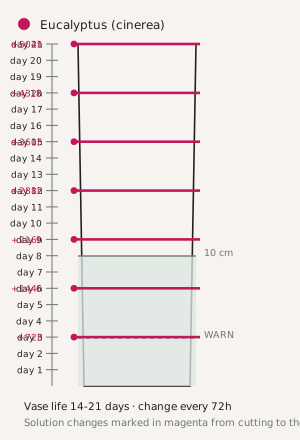
Vase range 14–21 days Recut 30 mm Water every 72 h Lignification 5 / 5 Ethylene sensitivity Low
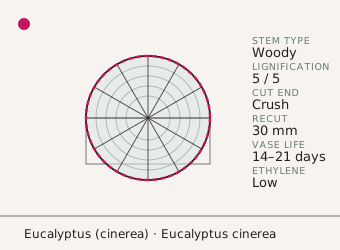
Crush the base, do not just cut it
At lignification 5 the stem is dense, hard wood with a thick, resinous bark. A clean cut wets only the cut face; crushing the bottom 40 mm opens the full length of vessel and lets the stem take up water along its whole submerged surface.
Eucalyptus also seals very quickly. Recut and crush immediately before it goes into water, and never leave it standing dry.
- Recut 30 mm at 45° on a woody section, not on a soft green tip.
- Crush the next 40 mm with pliers or a hammer until the wood is frayed.
- Rinse the frayed base — eucalyptus resin clouds water.
- Strip the lower leaves; they are the slowest part of the stem to re-wet and rot first.
Seventy-two hours is the right interval, not a compromise
The reason most stems need daily changes is a high bacterial load. Eucalyptus, with its low transpiration and its natural antimicrobial oils, stays below the plugging threshold for three days. Changing it more often than that wastes water without extending the vase life.
| Change interval | Vase life at 20 °C | Notes |
|---|---|---|
| 72 h | 18–21 days | optimum |
| 24 h | 19–21 days | no meaningful gain over 72 h |
| 7 days | 14–16 days | water faintly cloudy |
| no change | 10–12 days | leaves dry and drop |
Dry it instead, if you want it to last a year
Eucalyptus is the one stem here where drying is genuinely competitive with the vase. Hung in the dark at 20 °C it dries in three weeks and then holds colour and shape for a year or more. For arrangements that are meant to be rebuilt often, dry the eucalyptus and treat it as a structural element.
Note the one real hazard: eucalyptus oil is toxic to cats and dogs, and the dried foliage keeps its oil for months.
- Hang in the dark — sunlight bleaches the blue-grey bloom off the leaves.
- Do not seal dried eucalyptus in plastic; it moulds.
- Keep dried arrangements out of reach of pets; the oil does not degrade on drying.
- Bunched with other stems, eucalyptus makes an excellent grid for holding softer flowers upright.
Keep away from
- none of practical significance — this is the archive's least ethylene-sensitive stem